

  • facebook 
  • twitter 
  • instagram 
  • youtube 
  • linkedin 
Home
  • About
    • About ISSER
    • Director’s Welcome Message
    • Directors of ISSER
    • Partnerships & Collaborations
    • Annual Reports & Strategic Plan
    • Facilities
      • Computer Lab
      • Conference Facility
      • Library
  • People
    • Management Team
    • Faculty
    • Administrative Staff
    • Research Project Staff
  • Our Research
    • Research Overview
    • Publications
    • Research Projects
    • Research Divisions
      • Economics Division
      • Social Division
      • Statistics and Survey Division
  • Programmes
    • Programme Overview
    • Why Study at ISSER
    • PhD in Development Studies
    • MA/MPhil in Development Studies
    • Professional Short Courses
    • Students
      • PhD Students
      • MA/MPhil Students
  • News & Events
    • News
    • Events

Breadcrumb

  1. Home

ISSER Director Contributes to Global Dialogue on Sustainable Farming

News
February 16, 2026
Profile picture for user admin
by admin
  • facebook-f
  • twitter
  • envelope
  • print

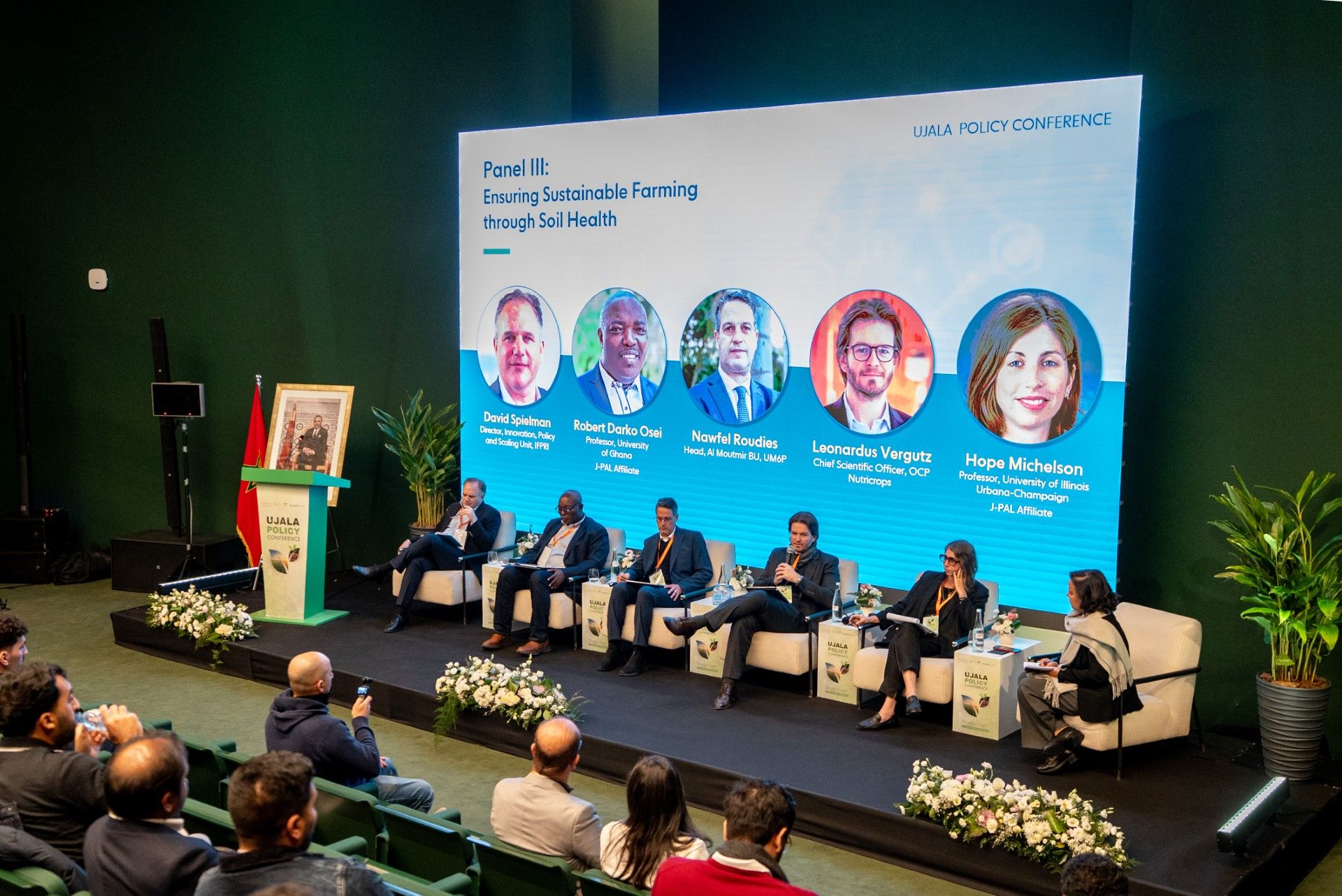
The Director of ISSER, Prof. Robert Darko Osei, participated in the UJALA Policy Conference hosted in Rabat, Morocco by Mohammed VI Polytechnic University (UM6P) in collaboration with J-PAL and OCP Nutricrops.

Prof. Osei joined Panel 3: Building Fertile Foundations – The Role of Soil Health in Sustainable Farming alongside international scholars and policy experts from the University of Illinois Urbana-Champaign, MIT, and the International Food Policy Research Institute (IFPRI).

The panel examined how soil health influences agricultural productivity and long-term food security. Discussions emphasized that sustainable farming depends not only on fertilizer use but on maintaining the essential functions of soil — including organic matter, balanced nutrition, and soil structure — which together allow roots to develop, water to be retained, and nutrients to be absorbed.

Speakers highlighted a shift in approach for agricultural policy and practice: rather than asking “what input should be applied?”, farmers and extension systems should ask “what does the soil need?” This requires gradual improvement through conservation agriculture and appropriate fertilizer use. However, the benefits are long-term, with measurable system-wide impacts often taking 15–25 years to materialize.

The policy implications were also discussed. David Spielman (IFPRI) noted that policymakers operate within short budget cycles, meaning research evidence must be presented in ways that fit practical implementation constraints and planning horizons.

From the Ghanaian perspective, Prof. Osei explained that adoption of soil-improving practices is both an agronomic and an economic decision. Many farmers face upfront costs and uncertain returns, while liquidity constraints, household priorities, and production risks limit their ability to adopt recommended practices. He emphasized that trust, learning, and sustained engagement are therefore essential to adoption.
 

Research presented by J-PAL affiliate Hope Michelson further showed that farmers are more likely to continue soil management practices when they receive repeated feedback, observe visible yield improvements, and obtain advice from credible sources. The panel noted that even accurate recommendations may fail when farmers lack confidence in input quality or advisory systems.

ISSER is proud to see its research expertise contributing Ghanaian evidence to international policy discussions. Participation in such global platforms strengthens the Institute’s role in shaping conversations on sustainable agriculture, evidence-based policy, and resilient food systems.
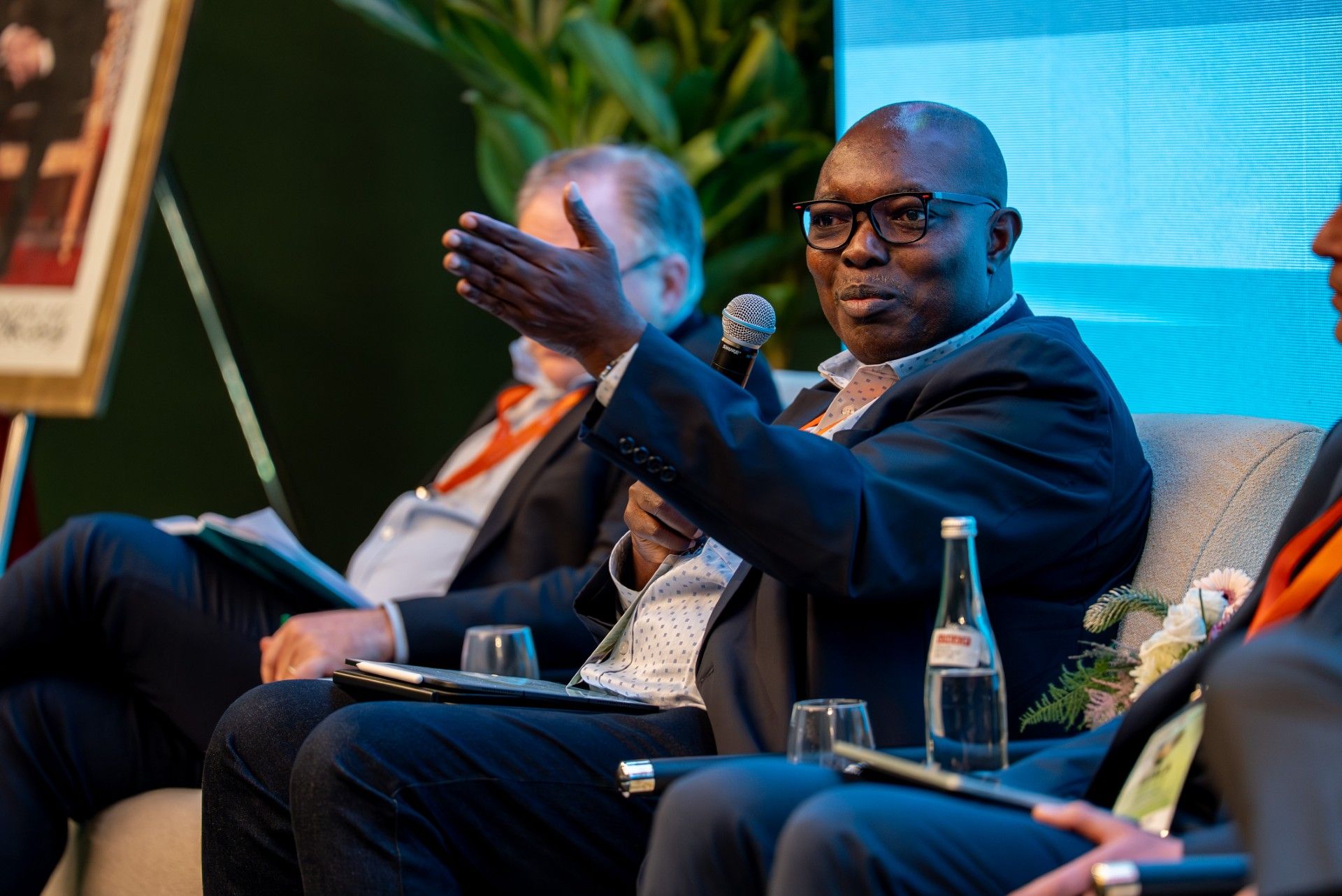
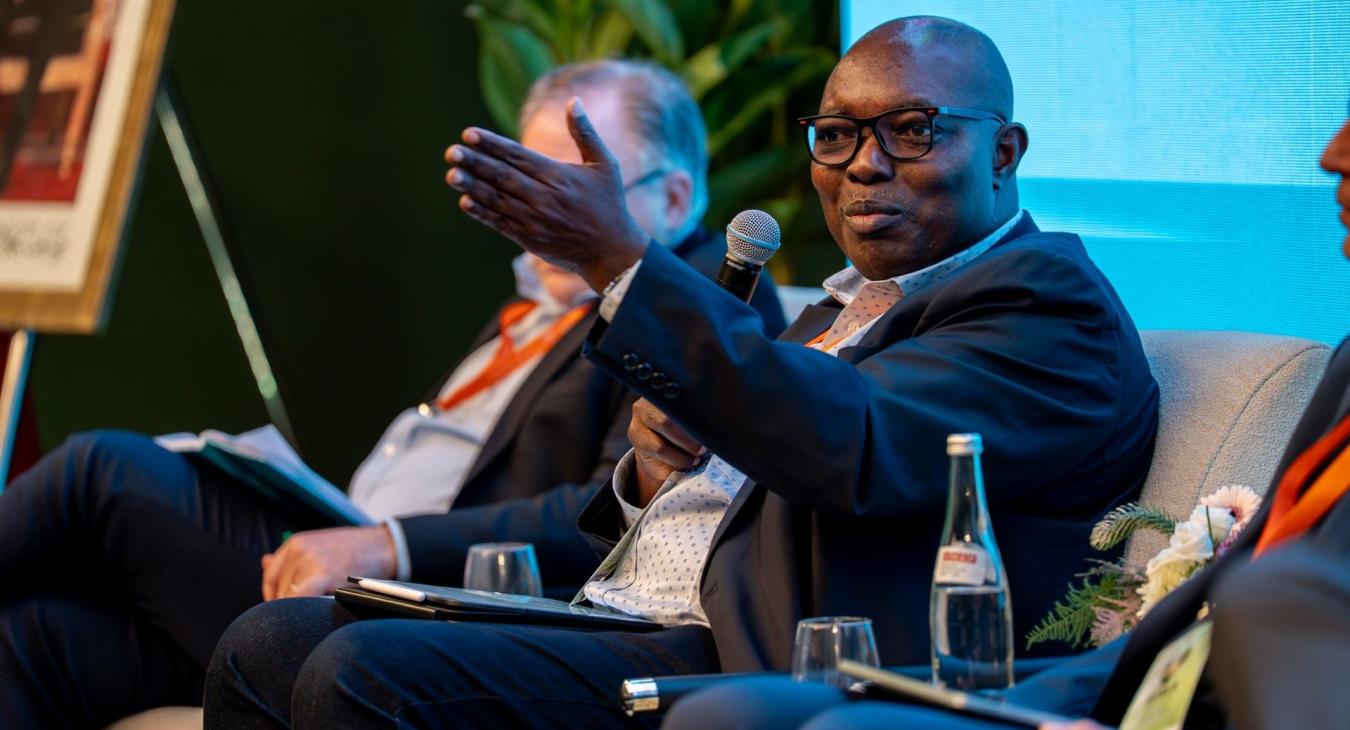
Prof. Robert Darko Osei speaking during Panel 3 at the UJALA Policy Conference in Rabat, Morocco

Read more articles

ISSER leads global education outcomes study across 820 Schools in Ghana
Newer
ISSER leads global education outcomes study across 820 Schools in Ghana
Teacher Capacity for Play-Based Learning in Ghana and Sierra Leone: Needs and Challenges of Early Childhood Education (ECE)
Older
Teacher Capacity for Play-Based Learning in Ghana and Sierra Leone: Needs and Challenges of Early Childhood Education (ECE)
  • Log in to post comments
Profile picture for user admin
admin
1
min read
A- A+
  • facebook-f
  • twitter
  • envelope
  • print

ISSER


About

  • Overview
  • Mission & Vision
  • Directors of ISSER
  • Annual Report

Study

  • Why Study at ISSER
  • PhD in Development Studies
  • Professional Short Courses
  • MA/MPhil in Development Studies

Research

  • Overview
  • Publications
  • Research Divisions
  • Research Projects
Copyright © ISSER-UG 2026
Home
Institute of Statistical, Social and Economic Research
Knowledge for Development
  • About
    • About ISSER
    • Director’s Welcome Message
    • Directors of ISSER
    • Partnerships & Collaborations
    • Annual Reports & Strategic Plan
    • Facilities
      • Computer Lab
      • Conference Facility
      • Library
  • People
    • Management Team
    • Faculty
    • Administrative Staff
    • Research Project Staff
  • Our Research
    • Research Overview
    • Publications
    • Research Projects
    • Research Divisions
      • Economics Division
      • Social Division
      • Statistics and Survey Division
  • Programmes
    • Programme Overview
    • Why Study at ISSER
    • PhD in Development Studies
    • MA/MPhil in Development Studies
    • Professional Short Courses
    • Students
      • PhD Students
      • MA/MPhil Students
  • News & Events
    • News
    • Events
Clear keys input element